


Rylee Meek is the CEO of the Social Dynamic Selling System, a value-based approach to lead generation and client acquisition he introduced in his book Food For Thought. Based in Minneapolis, Minnesota, Rylee Meek has built a career launching multiple seven- and eight-figure businesses that have generated more than $300 million in combined sales. He is also the best-selling author of The Kingdom Entrepreneur series and Intentional Influence, and he founded The Kings Council, where he hosts The Kings Council Podcast. A faith-driven business leader, Rylee Meek is active with organizations including the Board of Advisors, Answer International, and C-Suite for Christ, and he frequently mentors other entrepreneurs and sales professionals. Outside his professional pursuits, he values time with family, reading, and travel, interests that connect directly to his perspective on cognitive well-being and the sustained benefits that come from consistent mental engagement, including through reading itself.
Reading for pleasure is unfortunately not a common pastime in the US. A survey published in iScience revealed that just 16 percent of Americans engage in reading for fun. This represents a significant drop from the 40 percent of Americans who read for pleasure in 2003.
Moreover, in 2022 only 48.5 percent of Americans had read a book during the previous year, down from 54.6 percent in 2012, according to the NEA Survey of Public Participation in the Arts. The decreased rate of reading for pleasure may share a link with the nation’s literacy crisis: 21 percent of US adults are functionally illiterate, and 57 percent of Americans struggle to read complex texts.
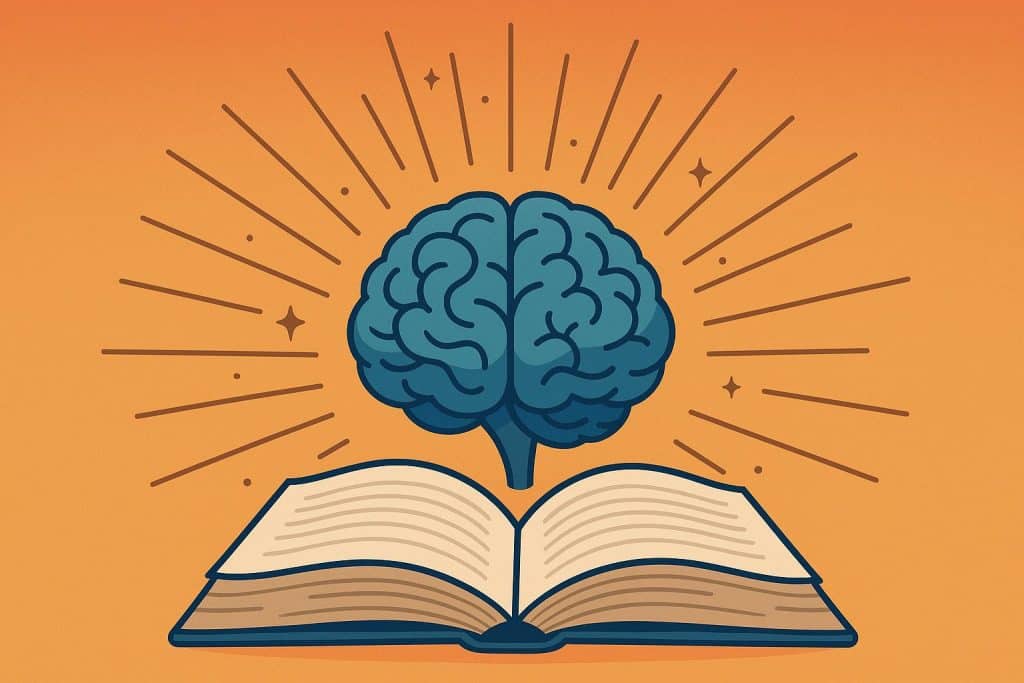
Smithsonian Magazine described the decline in reading for pleasure as “deeply concerning,” and there are good reasons for that. Reading for pleasure provides the human brain, mind, and even the body with an array of benefits.
Several regions in the brain are activated during reading and comprehension, including the temporal lobe, Broca’s area in the frontal lobe, and the angular and supramarginal gyrus. Reading also stimulates several critical white matter pathways.
Researchers have long understood the importance of reading for young people. In Proceedings of the National Academy of Sciences, published in 2012, Stanford University neuroscientists reported that reading is directly related to the growth of a young child’s white matter tracts, particularly those that feed the brain’s language centers and visual information processors. These white matter tracts in children who do not read or who struggle to read weaken over time.
According to Gaab, various remediation and intervention techniques support positive changes in white matter pathways.
The cognitive benefits of reading continue well beyond childhood. Reading is an excellent and simple form of mental stimulation, and there is research data that suggests this type of stimulation can minimize the risk of Alzheimer’s disease and other forms of dementia. Individuals concerned about degenerative cognitive conditions can amplify the benefits of reading by reading out loud.
Other studies demonstrate how reading can help with memory. Reading on a regular basis does not just reduce the rate of age-related memory deterioration, but can actively improve a person’s memory and thinking skills. Similarly, reading can help individuals develop longer attention spans and improve their ability to focus. In this way, reading has an opposite effect compared to using social media.
Readers typically have stronger vocabulary and analytical skills. Several education advocates believe that students should have more reading experiences in school, as it is the best method for learning new words. Reading fiction, meanwhile, is particularly effective for guiding the brain into a critical thinking mode, which translates to improved analytical skills in daily life.
In terms of brain health, reading narrative passages also improves brain connectivity, especially in the left temporal cortex. This part of the brain is linked to language reception. Studies reveal that the effect lasts for several days after reading.
Finally, reading’s positive impact on the brain can even affect the body. For example, studies have shown that nearly 70 percent of people who read silently for just six minutes experience a reduction in stress. Lower levels of stress mean improved cardiovascular performance, less muscle tension, and a lower risk for many serious health conditions.
About Rylee Meek
Rylee Meek is the Minneapolis-based CEO of the Social Dynamic Selling System and founder of The Kings Council, where he hosts The Kings Council Podcast. He is the best-selling author of Food For Thought, The Kingdom Entrepreneur series, and Intentional Influence, and has launched multiple seven- and eight-figure businesses generating more than $300 million in combined sales. A faith-driven entrepreneur and mentor, he is active with the Board of Advisors, Answer International, and C-Suite for Christ, and enjoys reading and traveling with his family.
