




Dr. Boutros Mikhail is a Toronto-based physician and general practitioner known for a patient-focused approach across emergency rooms and multiple clinics. With more than two decades of experience, Dr. Boutros Mikhail has treated thousands of patients in urban Toronto settings and in rural Newfoundland, drawing on training that spans dermatology, cardiology, endocrinology, and pediatrics. His clinical background includes advanced dermatology care for skin conditions, viral infections, and skin cancer, along with certifications in emergency ultrasonography, advanced cardiac life support, and family medicine cognitive behavioral therapy. Beyond direct patient care, he mentors medical students at the McMaster University Faculty of Medicine, sharing his evidence-based, patient-centered philosophy with the next generation of physicians. That same clinical judgment shapes how doctors like him sequence care between active acne and the scars it can leave behind.
A person may notice pitted marks, dark spots, or uneven skin after acne. Scar treatment can seem like the next step, especially when older breakouts have healed. Before choosing a procedure, a doctor first decides whether the patient needs acne control, scar evaluation, or both.
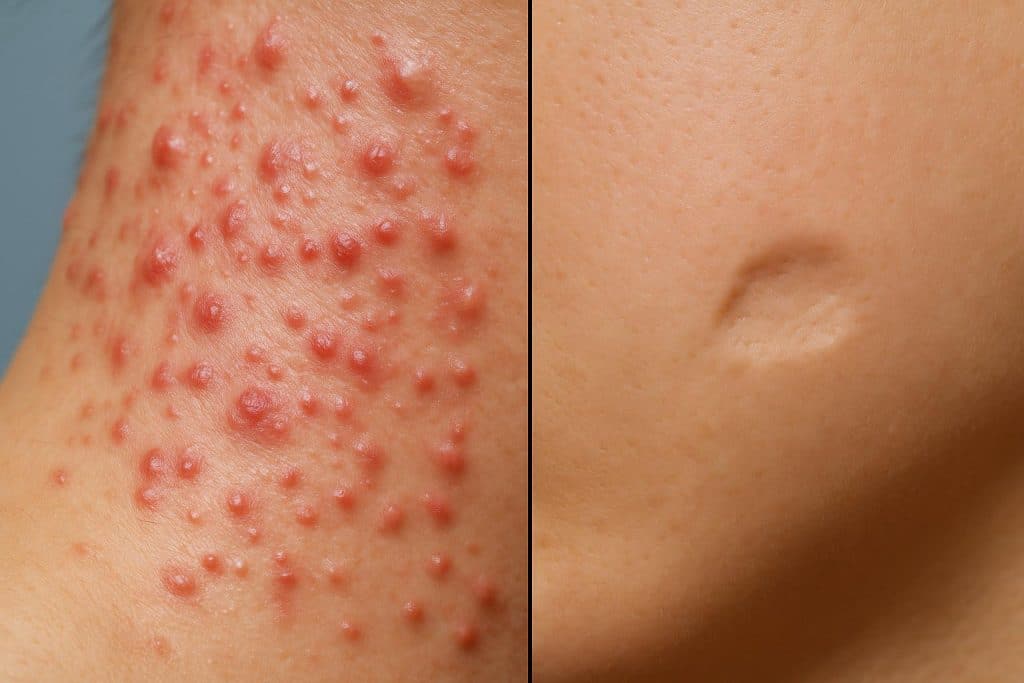
Acne treatment and acne-scar treatment serve different purposes. Acne treatment addresses current breakouts by targeting one or more factors such as clogged follicles, excess oil, bacteria, and inflammation. Scar treatment addresses permanent changes left after acne heals, including raised or indented texture, while flat color changes may require a different approach.
Active acne is present when the skin continues to develop whiteheads, blackheads, inflamed bumps, pustules, nodules, or recurring tender lesions. Active acne often changes the order of care because inflammation is still producing new lesions. A dermatologist may delay scar procedures while new breakouts remain part of the problem.
Treatment usually begins with controlling the acne and preventing additional lesions, followed by scar-focused treatment once the condition is sufficiently stable. Controlling acne also helps reduce future scar risk.
Deep, inflamed, or picked lesions can damage skin as they heal. A doctor may use acne treatment first to reduce new lesions that could leave lasting marks or texture changes. In that way, acne therapy becomes part of scar prevention.
Post-acne marks can include temporary discoloration and permanent texture changes. Some flat red, brown, bluish-gray, purple, or light spots remain after inflammation fades, but they are not true scars. Other marks involve raised tissue or indented areas where the skin surface has changed.
This distinction helps prevent treatment from starting with the wrong target.
The clinical review looks beyond the visible mark. A doctor may examine current acne lesions, scar location, scar type, skin tone, past treatments, medication use, and picking or scratching. These details help separate active acne, color change, true scarring, and mixed concerns.
They also help the doctor decide whether a family physician can manage acne first or whether dermatology referral fits the case.
Scar type then shapes the treatment discussion. Depressed scars may include narrow ice-pick scars, wider boxcar scars, and rolling scars that create an uneven surface. Raised scars include hypertrophic scars and keloids, which result from excess scar tissue above the surrounding skin.
Flat color changes may require a separate plan because the skin can remain smooth even when discoloration is visible.
After the doctor identifies the mark type, the next question is what treatment the skin can reasonably receive. A doctor may consider scar depth, scar location, skin type, goals, budget, health, medication history, and previous scar treatments.
Procedures such as chemical peels, laser resurfacing, skin needling, fillers, injections, dermabrasion, subcision, or excision can affect healing and side effects, so a doctor should individualize treatment strength, timing, and referral.
Medication history and aftercare also affect treatment timing. Some acne medicines can cause dryness, redness, irritation, or sun sensitivity, and certain scar procedures may be unsafe while a medication is being used or soon after it is stopped.
After treatment, the patient may need wound care, sunscreen, gentle cleansing, follow-up visits, and an adjusted acne regimen to support healing and reduce the risk of new breakouts and scars.
A careful sequence prevents scar treatment from starting too early or aiming at the wrong problem. When a doctor first identifies active acne, color change, scar type, and healing risks, the next step becomes clearer.
The patient may need acne treatment, scar-focused care, or referral, but the choice comes from the skin’s actual condition rather than the wish to treat every mark at once.
About Dr. Boutros Mikhail
Dr. Boutros Mikhail is a Toronto-based general practitioner with more than 20 years of clinical experience across hospital, clinic, and rural settings, including practice in Newfoundland. His training includes an M.B.Ch.B. from Cairo University’s Faculty of Medicine, a diploma in pediatrics, and a distinction diploma in Practical Dermatology from Cardiff University. He holds certifications in advanced cardiac and trauma life support and is a fellow of the College of Family Physicians of Canada. He also mentors medical students at McMaster University.